AI-native development is rapidly transforming how software is built, tested, and deployed. Instead of writing every line of code manually, developers are now leveraging AI systems to generate, optimize, and maintain applications. This shift is not just about productivity, it represents a fundamental change in the role of developers and the future of software engineering.
What is AI-native development?
AI-native development is not about having an AI tool fill in a line of code. It is a paradigm shift in the manner in which software is built. Rather than manually writing all functionality, loops, and classes, developers specify what they desire, either in plain language or high-level specifications, and AI systems create, compile, and maintain the resulting code.
Why AI-native development is not just a productivity gimmick ?
Early AI coding tools were glorified autocomplete. What is now coming forth is qualitatively different. Current AI-native development systems are able to reason over entire codebases, comprehend dependencies, propose architectural modifications, and even heal themselves when something goes wrong in production. They do not just serve your term, they are familiar with the project.
Concerns developers have about AI-native development ?
When AI is able to write code, will the industry continue to require as many engineers? The short answer is: yes, but differently. The need for developers who are syntax-only is declining. The necessity to possess developers who can create systems, develop requirements correctly, critically analyze AI outcomes, and have a thorough understanding of pipelines as multifaceted systems is growing at a fast rate.
What is the governance dilemma that no one has so far solved?
AI-native developmentcode ships quickly, sometimes too fast. Teams are finding that AI-written code can be operable but brittle, passing tests while concealing underlying logic mistakes only revealed in the real world. Security weaknesses, licensing issues, and architecture inconsistencies are real threats when humans stop reading every line. Organizations that manage this effectively treat AI as a junior developer: competent, quick, and helpful, but still in need of oversight, guidance, and limits.
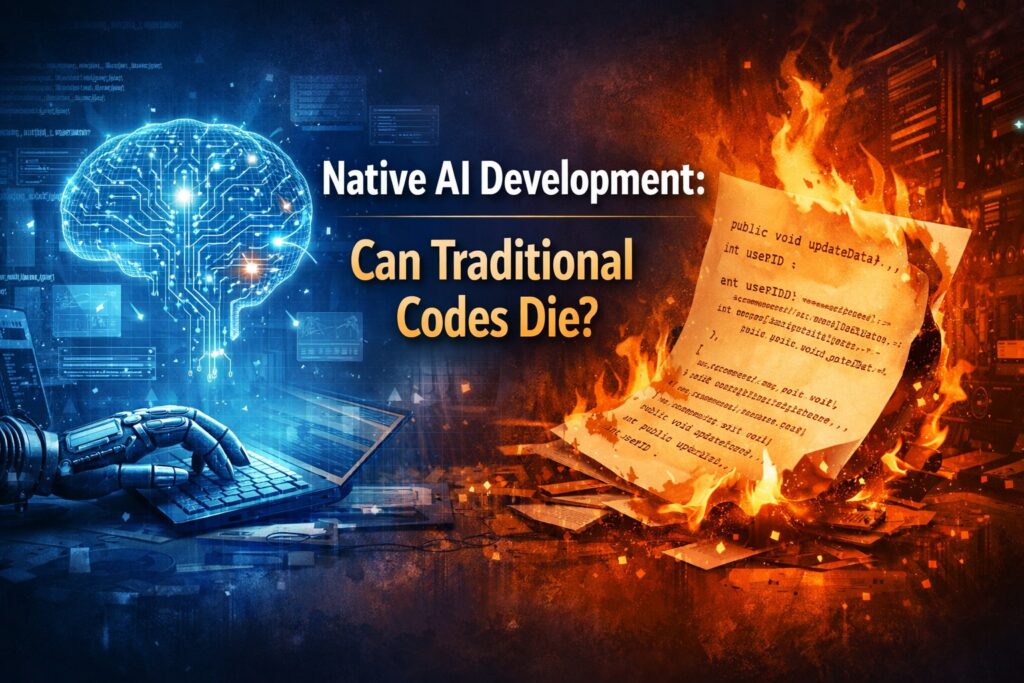
Does that make traditional coding dead?
No. However, it is being redefined. Writing code line by line is becoming what writing machine code by hand is today, possible, but rarely necessary for what AI-native development can handle reliably. The art is not becoming extinct, it is being pushed up the stack. The most successful developers of the next decade will not be the fastest typists. They will be the most thoughtful ones.