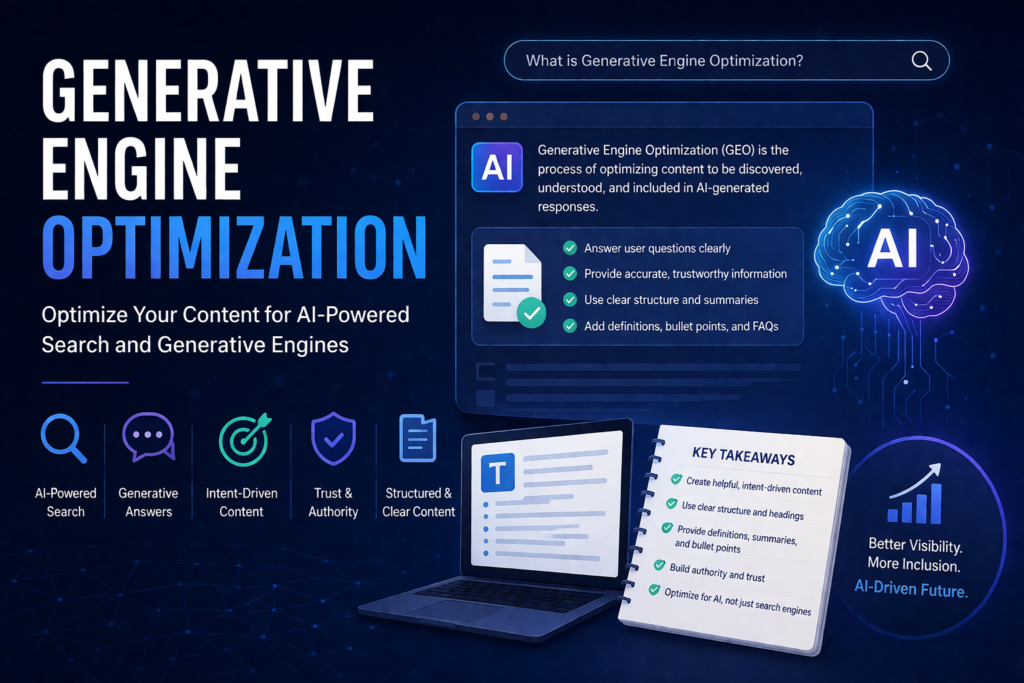
Generative Engine Optimization (GEO) is a new strategy for improving online presence by targeting AI search engines and other generative tools, in addition to traditional search engines. With AI chatbots and answer engines becoming more prevalent, search patterns are changing. Rather than clicking on links, users want quick, accurate, and human-like responses. Generative Engine Optimization aims to get your content in those AI-generated answers.
Essentially, Generative Engine Optimization is about creating content that is clear, credible, and accessible to AI. While traditional SEO is all about keywords, backlinks, and rankings, GEO is about context, clarity, and knowledge. AI doesn’t just search for keywords, it understands meaning. So, you need to write your content in a way that addresses user questions, offers value, and establishes authority.
Intent-driven content is an important aspect of GEO. Instead of targeting specific search keywords, you’re writing to answer questions. Generative engines prefer content that answers a question in a succinct manner. For instance, rather than a general blog article, a step-by-step guide with headings, FAQs, and explanations is more likely to be applied by a generative system and perform well in Generative Engine Optimization strategies.
The structure of the content is also crucial. AI likes well-formatted, easy-to-digest content. Including headings, bullet points, and clear language makes the content more accessible for humans and AI alike. Headings and subheadings, summaries, and section breaks allow AI to easily find valuable information, which supports Generative Engine Optimization (GEO) efforts.
Trust and authority are also important in GEO. AI algorithms prefer to draw from reputable sources. So, your content should demonstrate your knowledge, provide reliable information, and avoid inaccurate statements. Your site and content need to be consistent for credibility, which is essential for strong Generative Engine Optimization results.
Semantic relevance also helps with GEO. Your page should contain other words and phrases related to your main keyword. That way, AI can better comprehend your topic. It’s better to write conversationally rather than stuffing keywords into your content.
Another emerging element of GEO is answer optimization. AI search engines often seek direct answers. Provide definitions, summaries, and bullet points to emphasise key points to improve your chances of being included. This can be thought of as content that is “quote-worthy” in Generative Engine Optimization.
To put GEO into action, prioritise quality and value. Look for common questions and provide detailed answers. Use subheadings, write in simple terms, and make sure your content is reliable and current. Including FAQs and summaries will also boost your chances of being noticed by AI.
In summary, Generative Engine Optimization is the future of digital content. As search engines evolve to respond to AI-driven search patterns, companies and creators need to keep up. GEO doesn’t mean the end of SEO, just the evolution of it. Through clarity, intent, and value, you can stay relevant and accessible to AI engines.
Read More About Why 80% of Software Projects Fail (And How to Avoid It)