
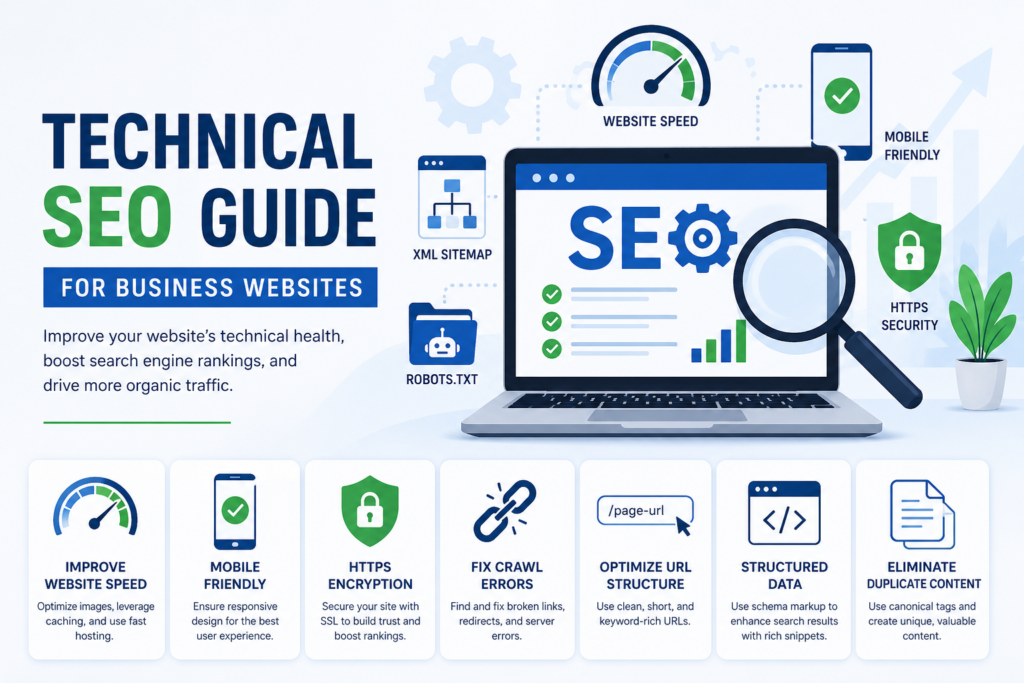
In the digital age, it’s not enough to have a website for your business. If it loads too slowly, is confusing to browse, or is not well understood by search engines, you could be missing out on potential customers. This is where technical SEO comes in. Technical SEO involves optimising your website’s technical aspects to ensure search engines can easily access, understand and rank it. An effective technical SEO approach can help companies boost organic traffic, enhance user experience, and drive conversions.
1. Improve Business Websites
Page speed is a crucial ranking factor. Users demand fast loading pages and if your site is slow, you may lose potential customers before they even browse your product or service. Image optimisation, code minification, browser caching and a good hosting service can help speed up your site. Not only will a faster website improve your search engine rankings, it will also improve the user experience.
2. Optimise Your Website for Mobile
The majority of people access websites from their mobile devices. Responsive websites are favoured by search engines, so it’s essential to have a mobile-friendly website. Your site should resize to the device being used, with text that’s easily read, buttons that can be clicked and menus that are navigable. This enhances user experience and search engine rankings.
3.Secure with HTTPS SEO Encryption
Google and users demand security. Encrypted HTTPS connections secure data and inspire confidence, particularly for websites that seek contact information or handle transactions. Encrypted sites are favoured by search engines and may rank better than others. An SSL certificate is a simple technical SEO tactic.
4. Eliminate Crawl Errors and Broken Links
Search engines use bots to crawl websites. When bots find broken links, redirection problems and 404 errors, your rankings can be affected. Use Google Search Console or other tools to monitor your site for crawl errors. Resolve broken links, update redirects, and delete old pages to keep your site healthy.
5. Optimize SEO URL Structure
User-friendly URLs are easier for users and search engines to comprehend. Avoid long strings of numbers and characters; use keyword-rich URLs. For instance, a URL for a digital marketing services page should be /digital-marketing-services. Clear URLs enhance user experience and search engine results.
6. Generate XML Sitemap and Robots.txt
An XML sitemap allows search engines to find all the pages in your site. It’s like a map of your website. A robots.txt file provides instructions for search engines on pages to exclude or include. These files enhance crawling and indexing of critical content.
7. Implement Structured Data
Structured data allows search engines to understand your content. It can enhance search results with rich snippets like ratings, frequently asked questions, business information and product details. For local businesses, schema markup for address, phone number and operating hours can improve search listings.
8. Eliminate Duplicate Content
Duplicate content can devalue your content. Use canonical tags to specify the canonical version of similar pages. Make sure product, blog and service pages have distinct titles, descriptions and content.
Final Thoughts on Business Websites SEO
Technical SEO is critical for business sites. It can be the difference between good content and poor rankings. Faster, secure, mobile-friendly, crawable and well-organised websites will lead to improved search engine rankings and user experience. Periodic technical SEO inspections will ensure that your website remains competitive and sustainable.
Read More About How to Get Clients with SEO (No Ads)